The artist
A life in motion
leaves a trail.
Meet Tony
The work begins with attention.
Tony Matthews is an artist, an entrepreneur, and a person who has stayed curious about what might be around the next corner. ArtAntony is the record of that curiosity — made visible in color, shape, and scale.
Every piece begins somewhere: a place, a journey, a conversation, or a moment worth remembering. The story of the work starts well before the canvas.
Chapter one
Before the canvas.
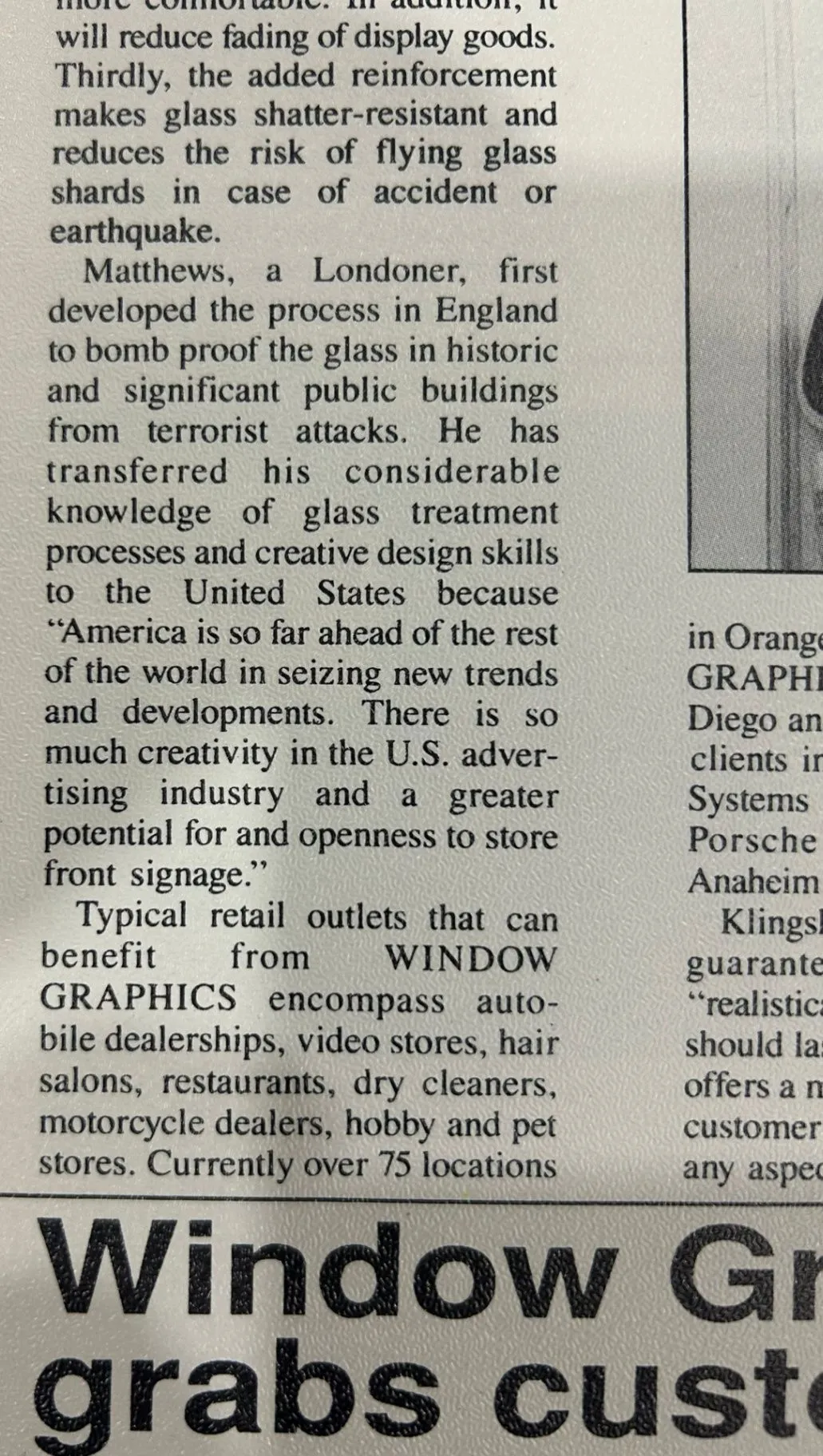
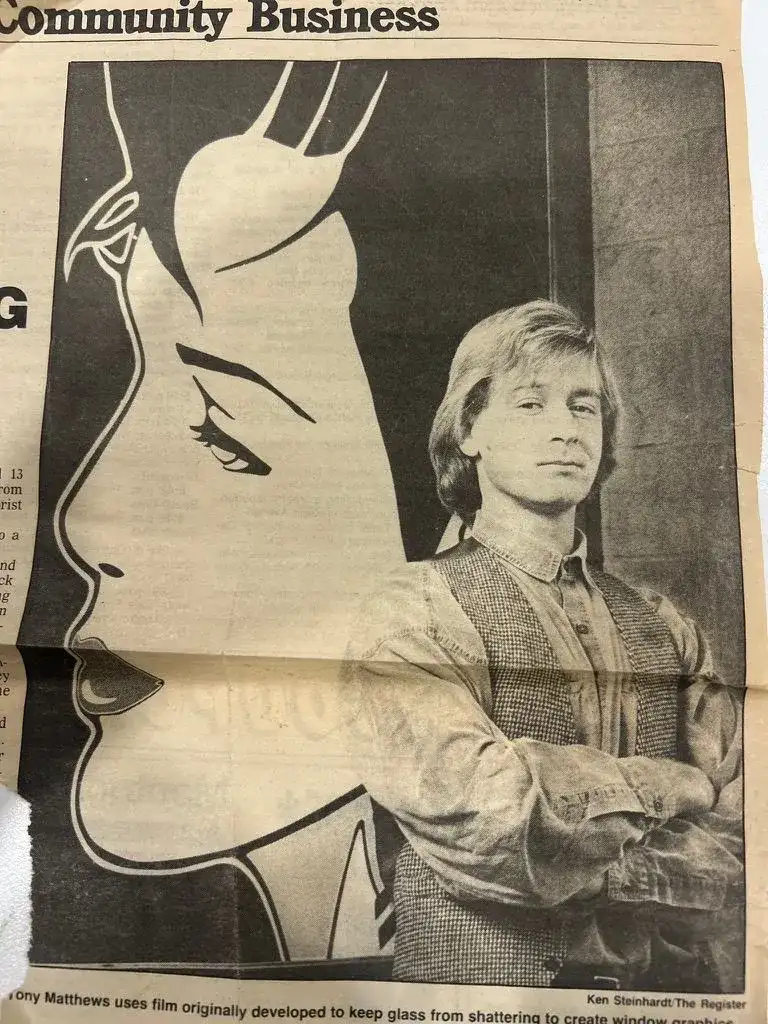
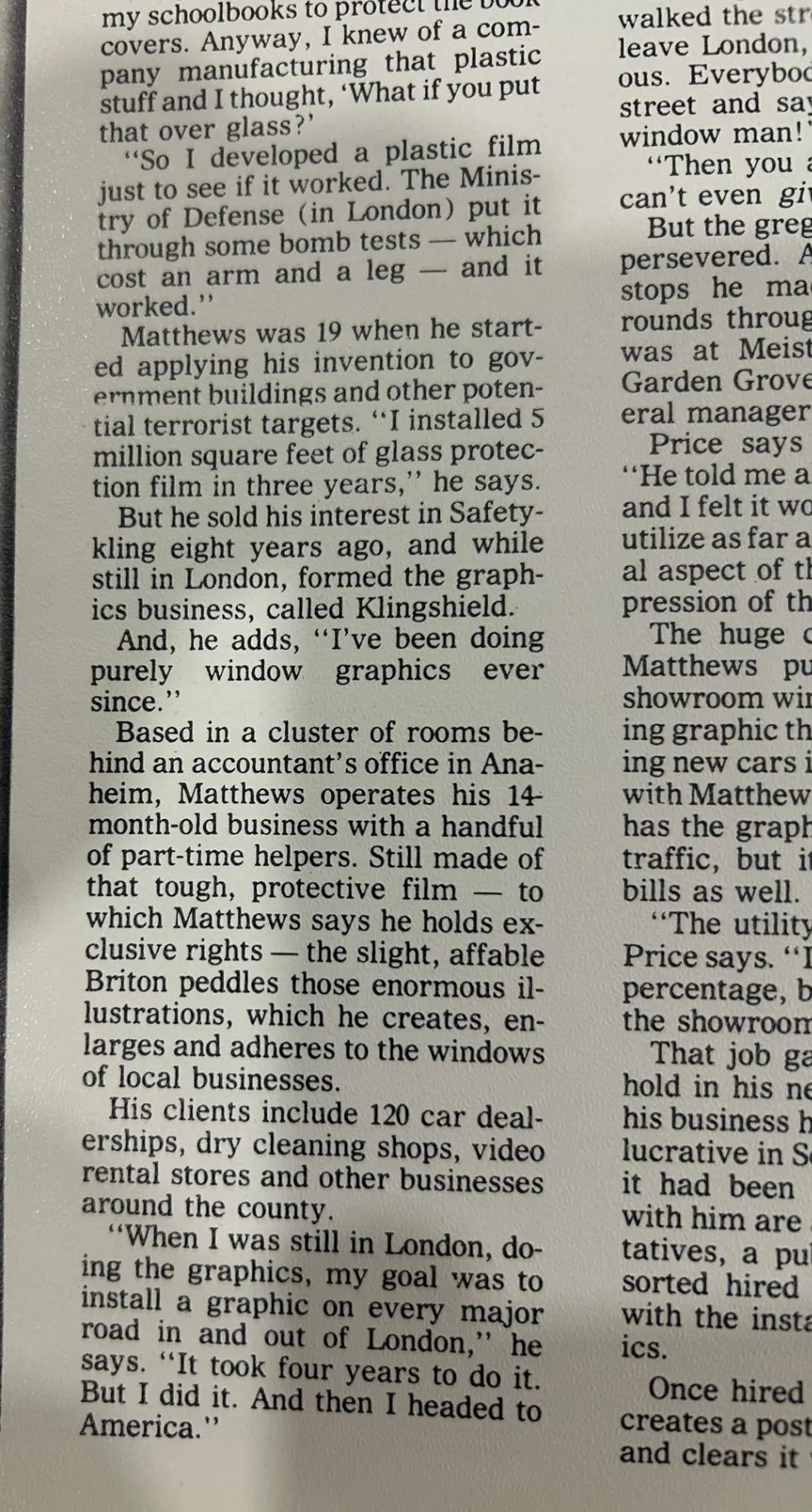
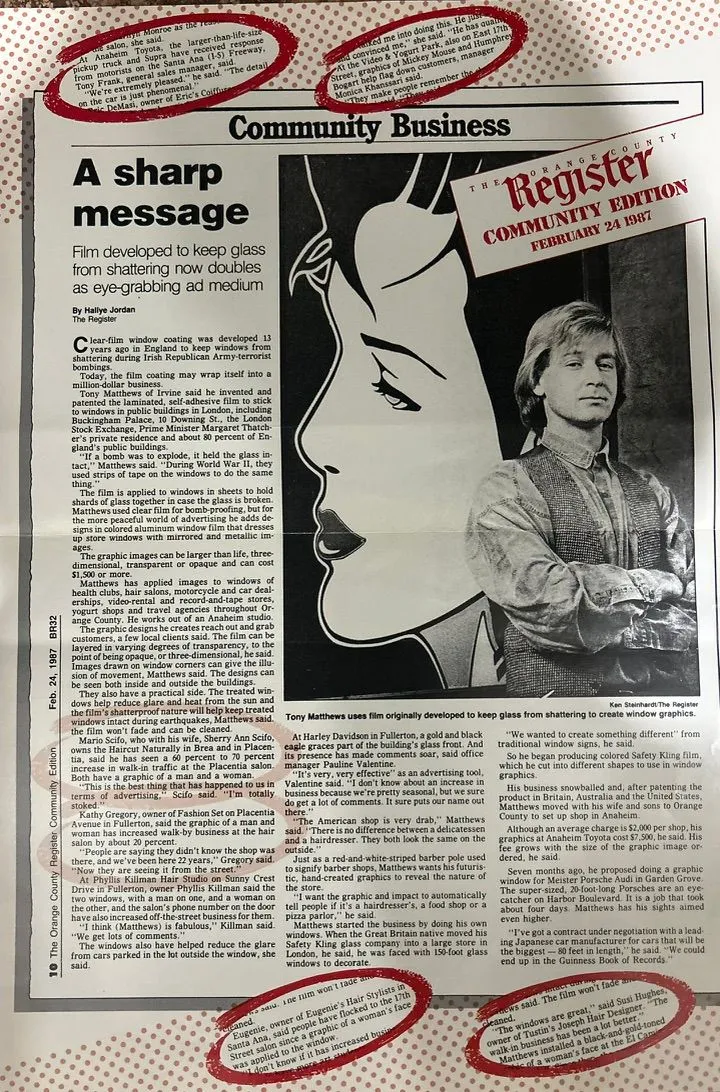
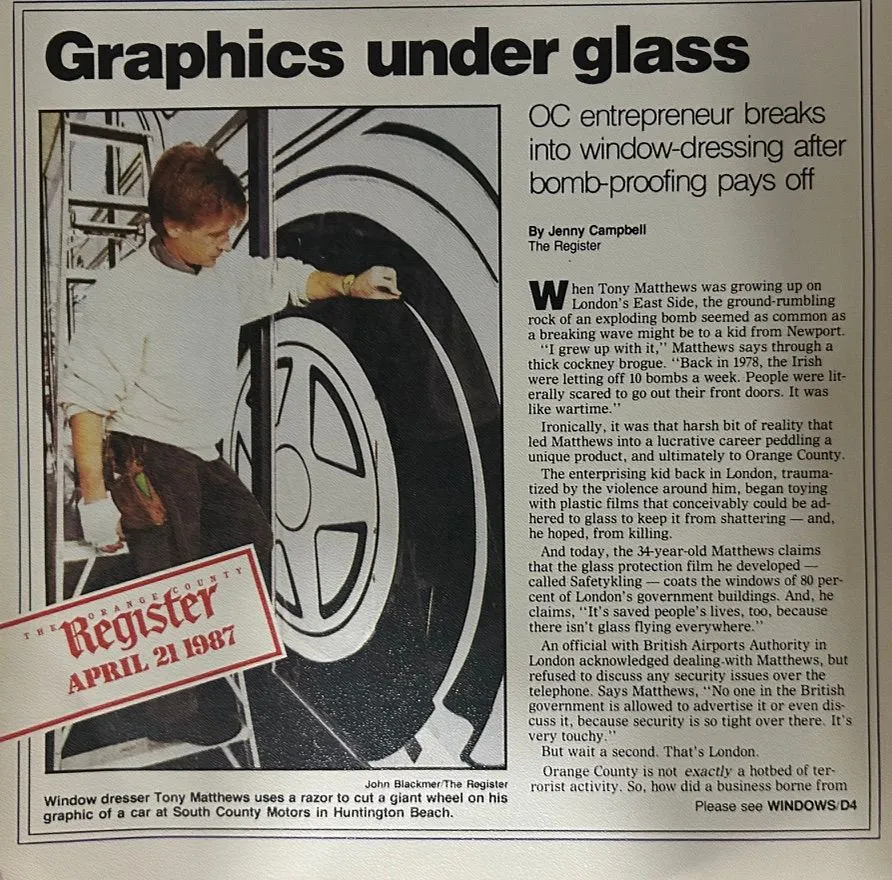
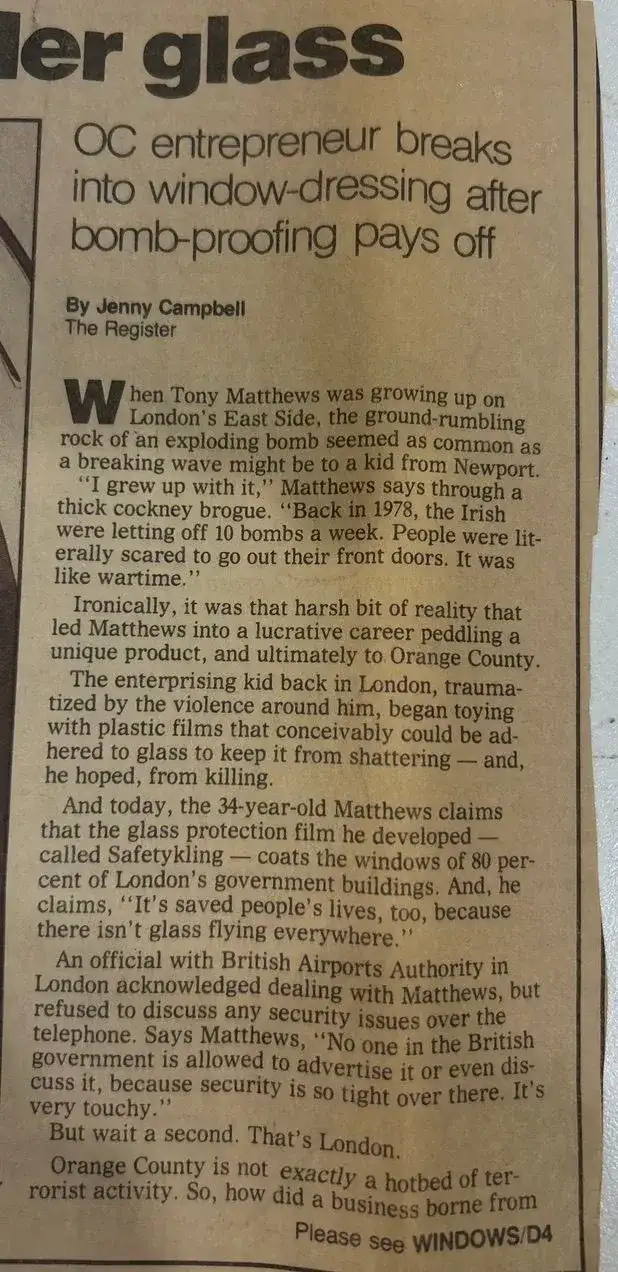
Tony grew up on London’s East Side during a period of bombing and unrest. A 1987 Register feature recalled the 1978 bombing campaign and the atmosphere of fear around it. In that same period of his life, he began looking for a practical answer to a practical danger.
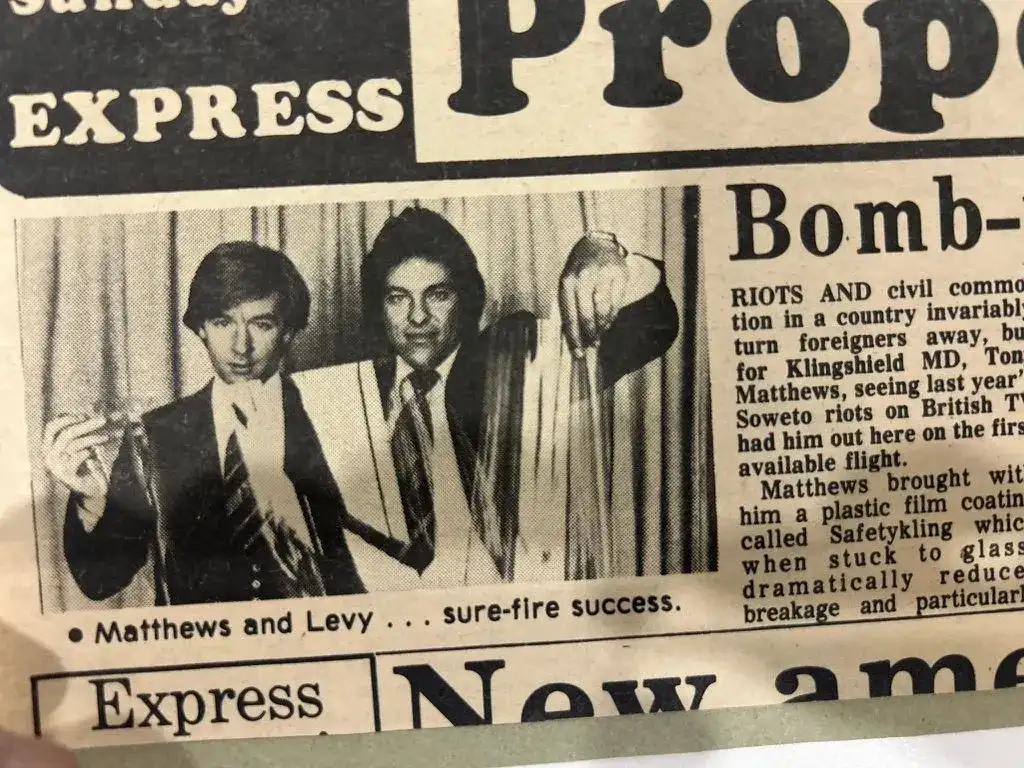
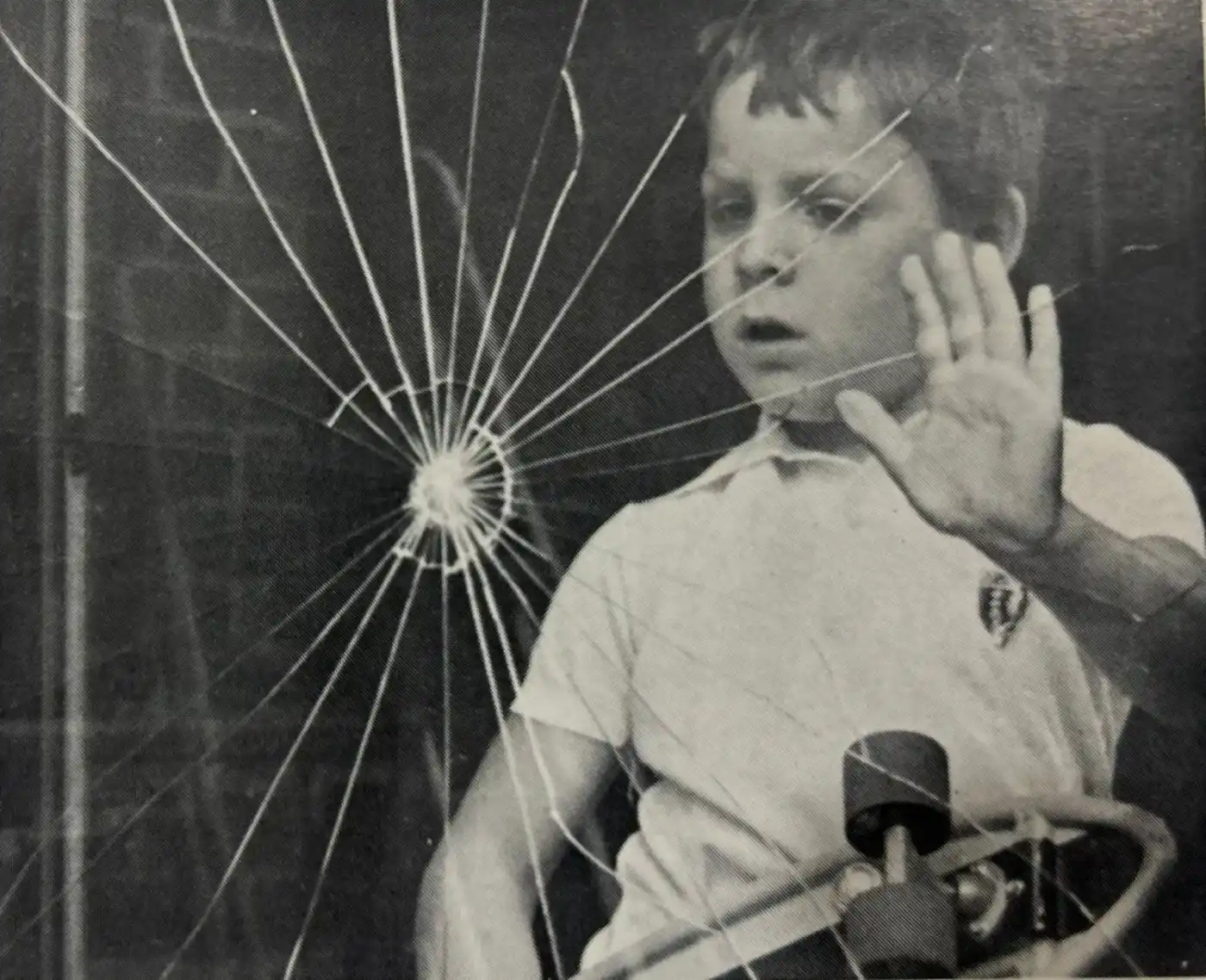
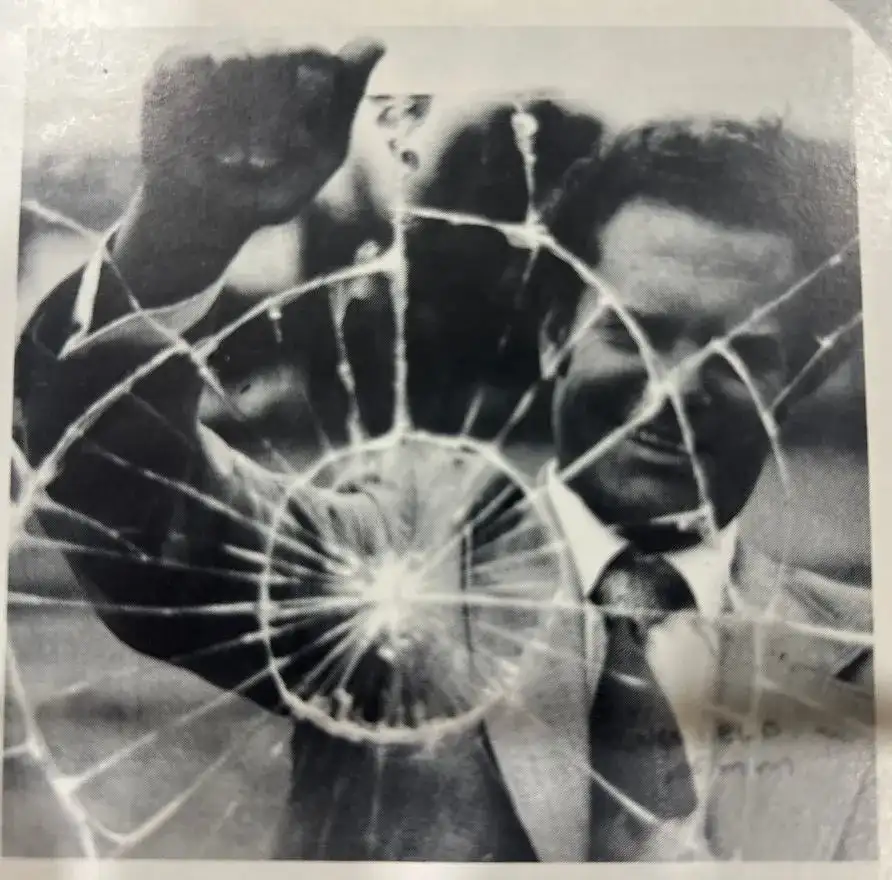
The clippings said that, at 19, Tony developed a plastic film process in England to make glass safer and shatter-resistant. The Express later identified him as Klingshield MD and described the coating as Safetykling, a film that, when stuck to glass, dramatically reduced breakage. Photographs from that coverage showed fractured glass and a hand pressed against a crack.
One historical account said he installed five million square feet of glass-protection film in three years; another said he held exclusive rights to the process. Those figures belonged to the period reporting and are preserved here as archival history, not as independently verified current claims.
Chapter two
A new country.
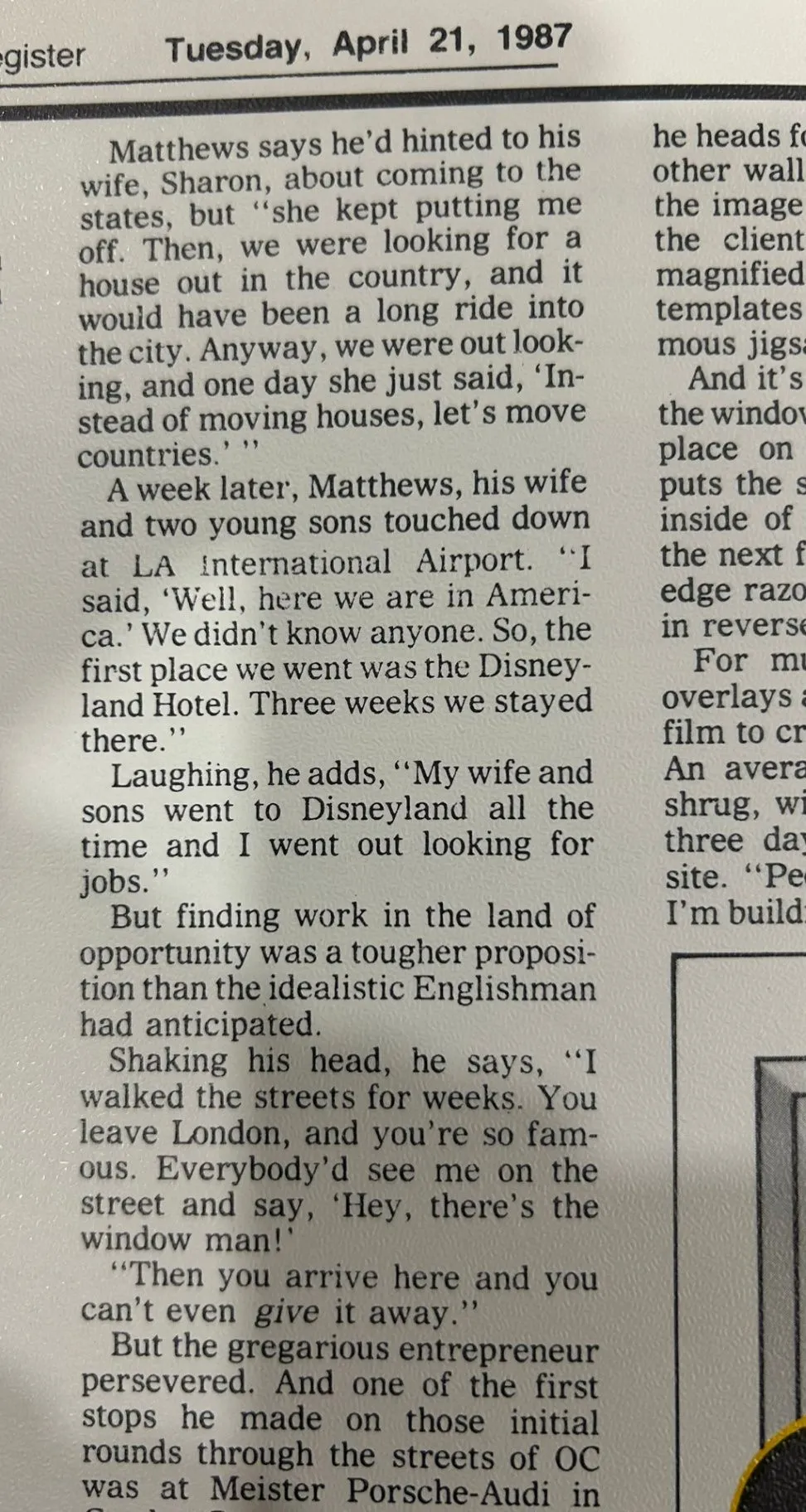
In April 1987, Tony moved from London to the United States with his wife, Sharon, and their two young sons. The family arrived at Los Angeles International Airport and initially stayed at the Disneyland Hotel while Tony went looking for work.
The move was a leap, but the instinct was familiar: find the next useful idea, then make it visible.
Chapter three
Graphics under glass.
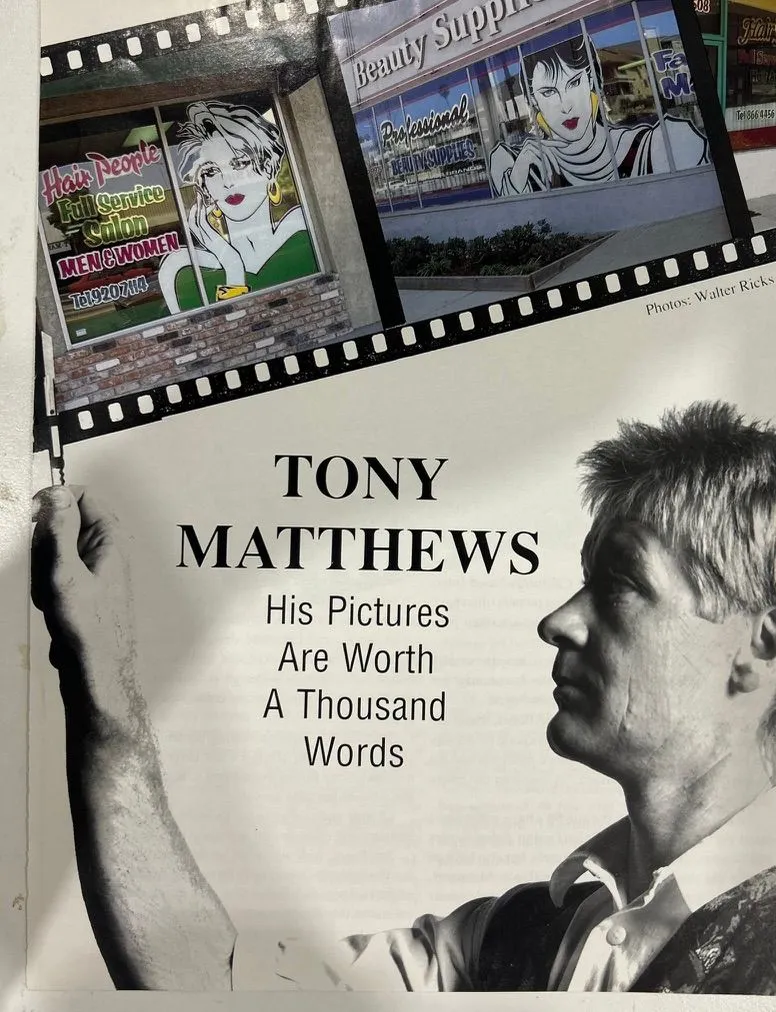
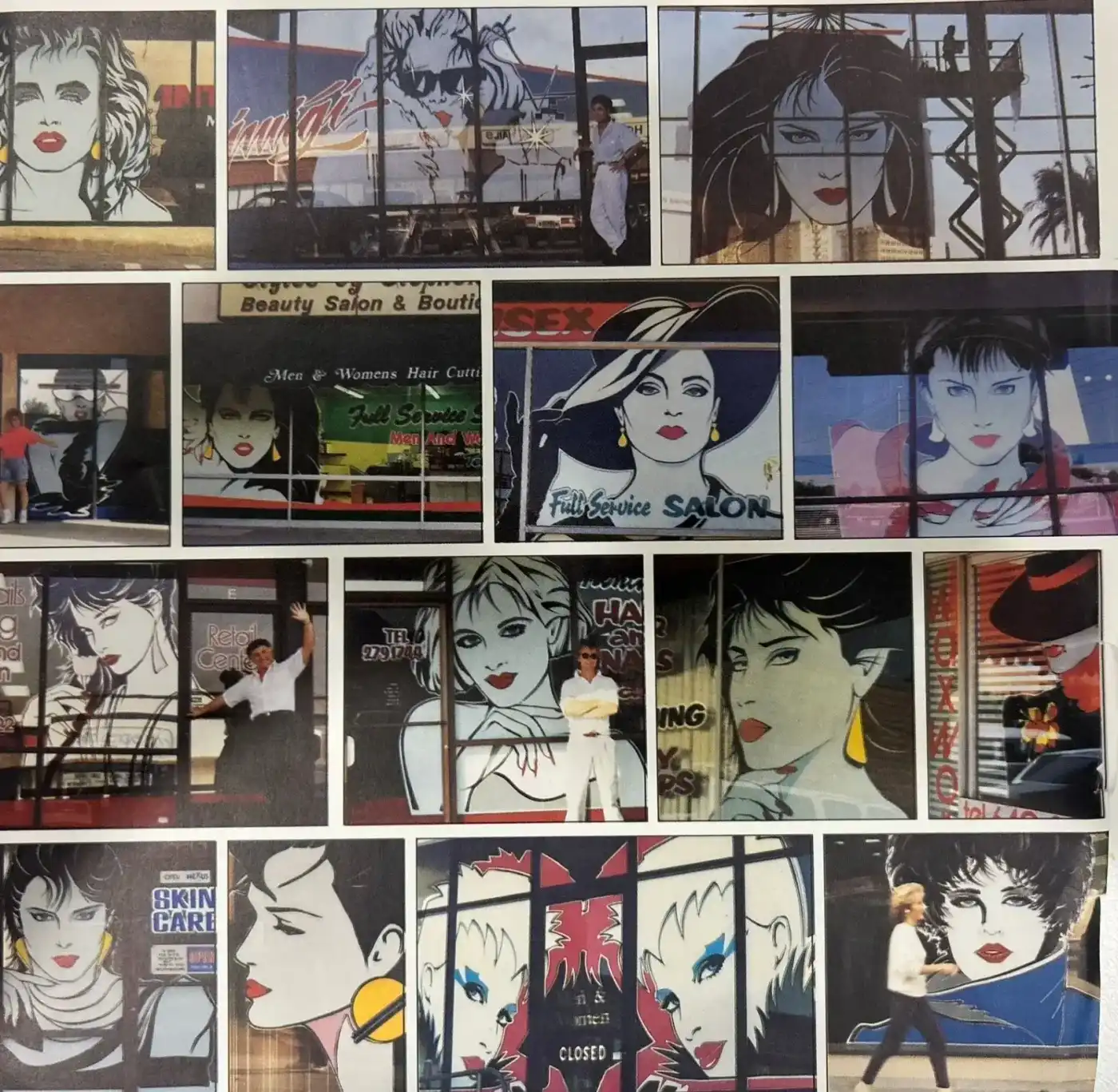
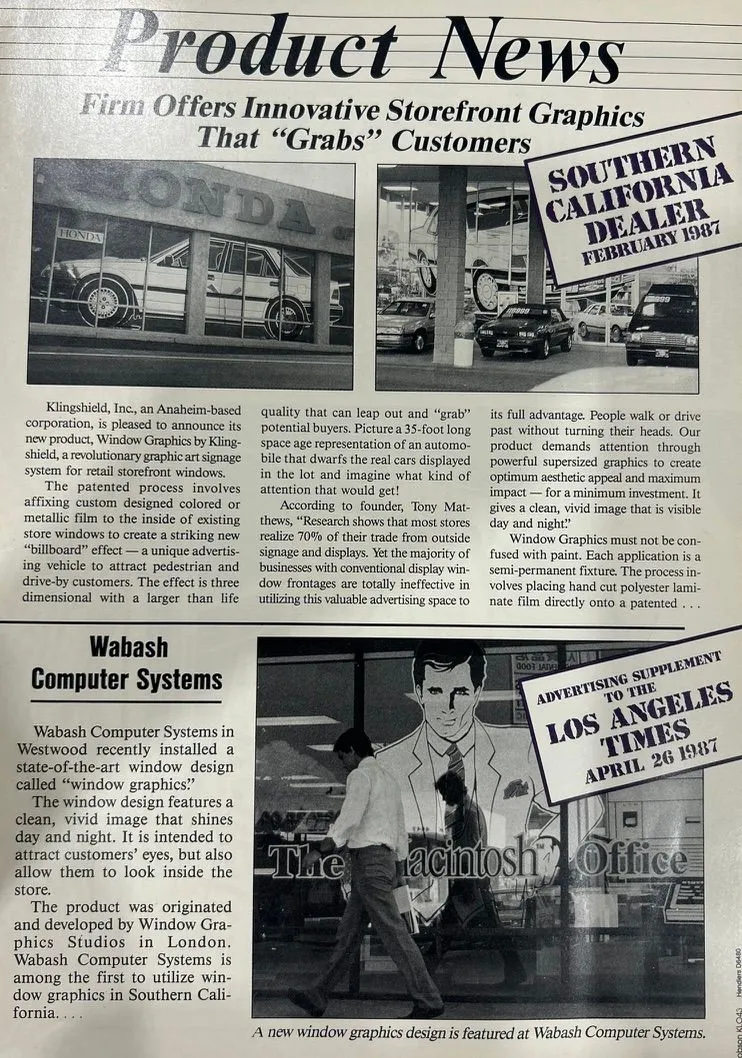
While still in London, Tony formed a graphics business called Klingshield. After coming to Orange County, he developed large-scale window and storefront graphics, later associated with Window Graphics. The archive shows him working at the meeting point of image, material, and place: designing at a scale meant to change how a passerby saw a building.
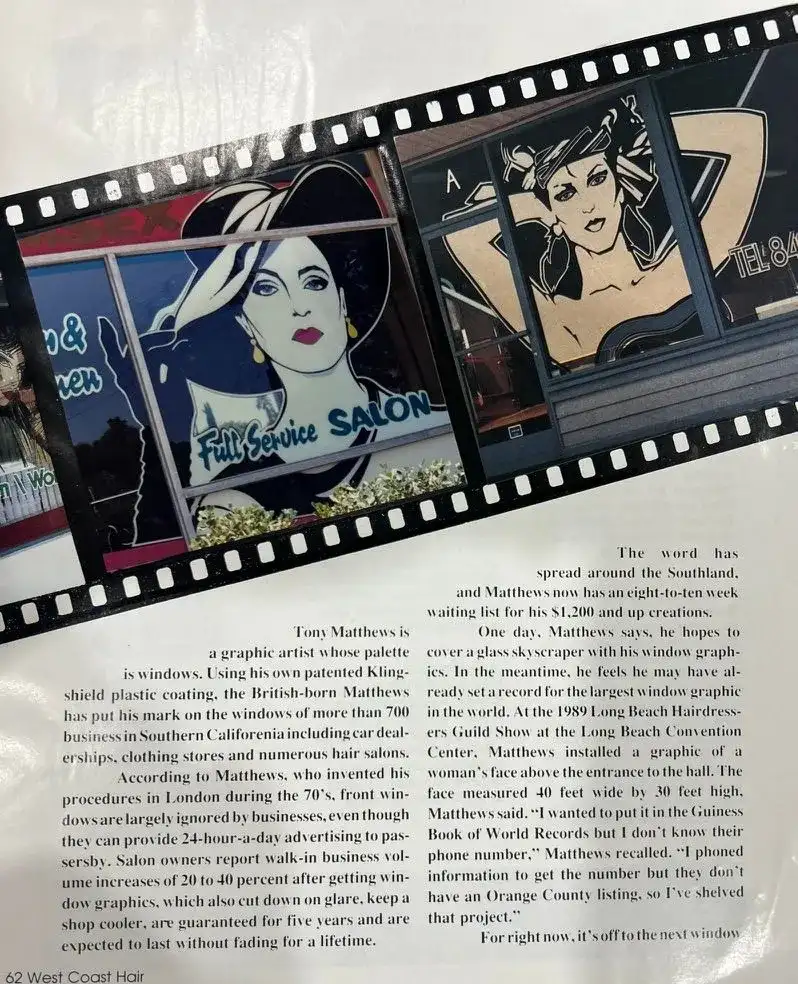
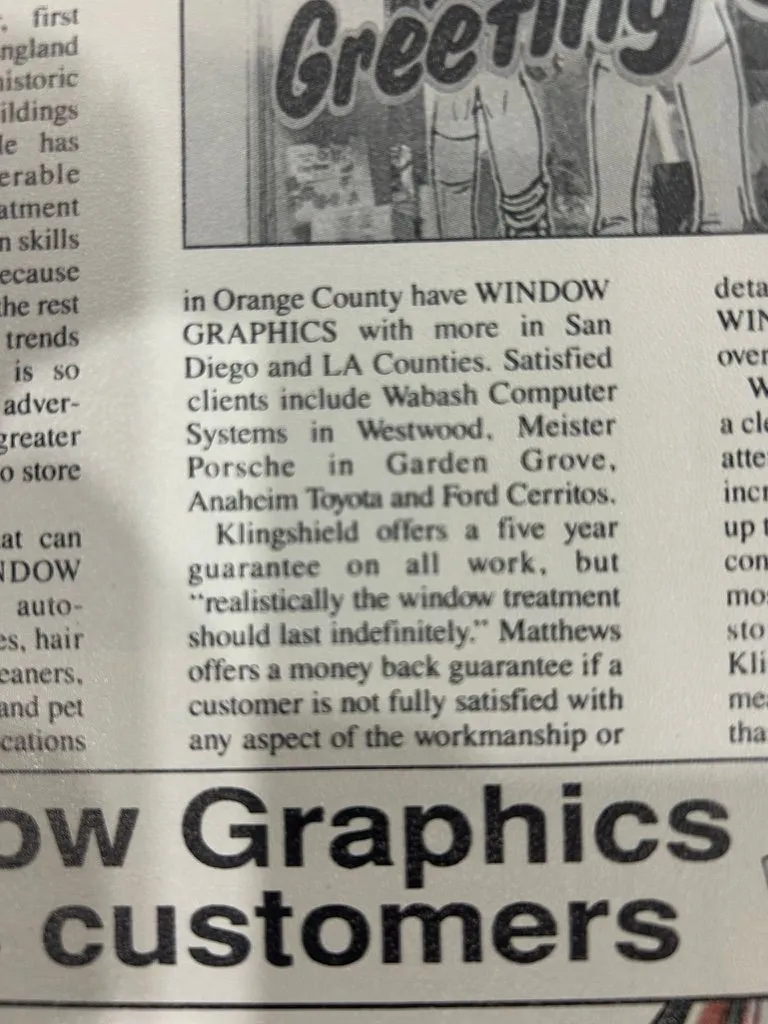
West Coast Hair described Tony as a graphic artist “whose palette is windows.” The feature reported that his patented Klingshield plastic coating had marked the windows of more than 700 Southern California businesses, including car dealerships, clothing stores, and hair salons. It said salon owners saw walk-in business rise after the graphics went in, while the coating cut glare, kept shops cooler, and carried a guarantee. Those were the publication’s period claims.
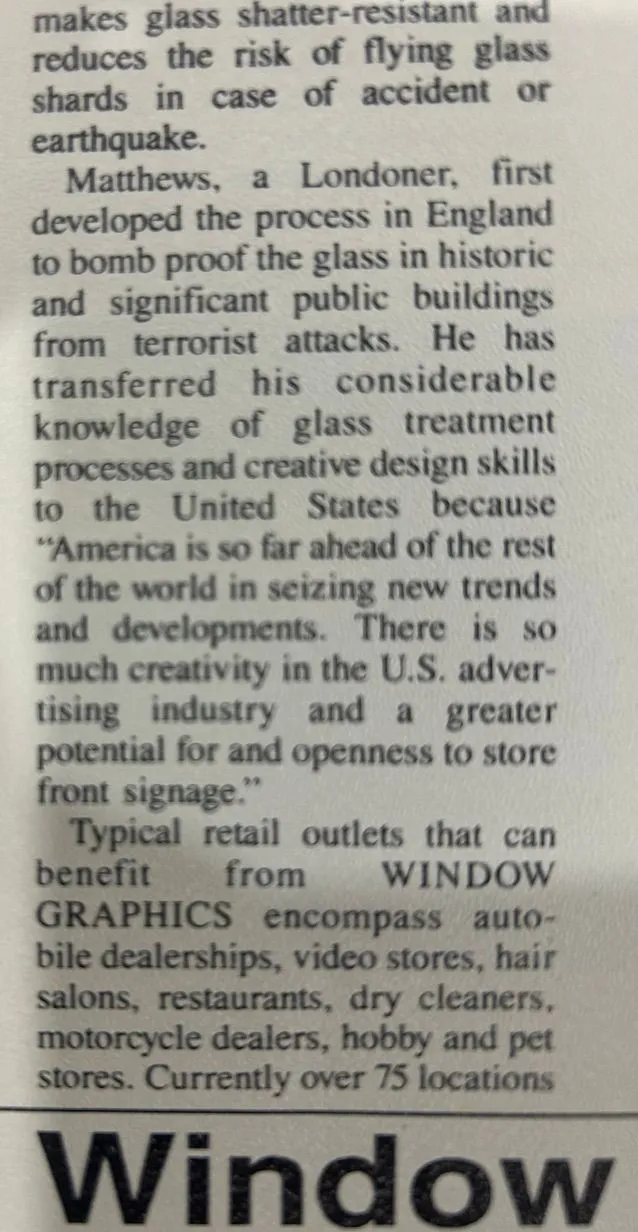
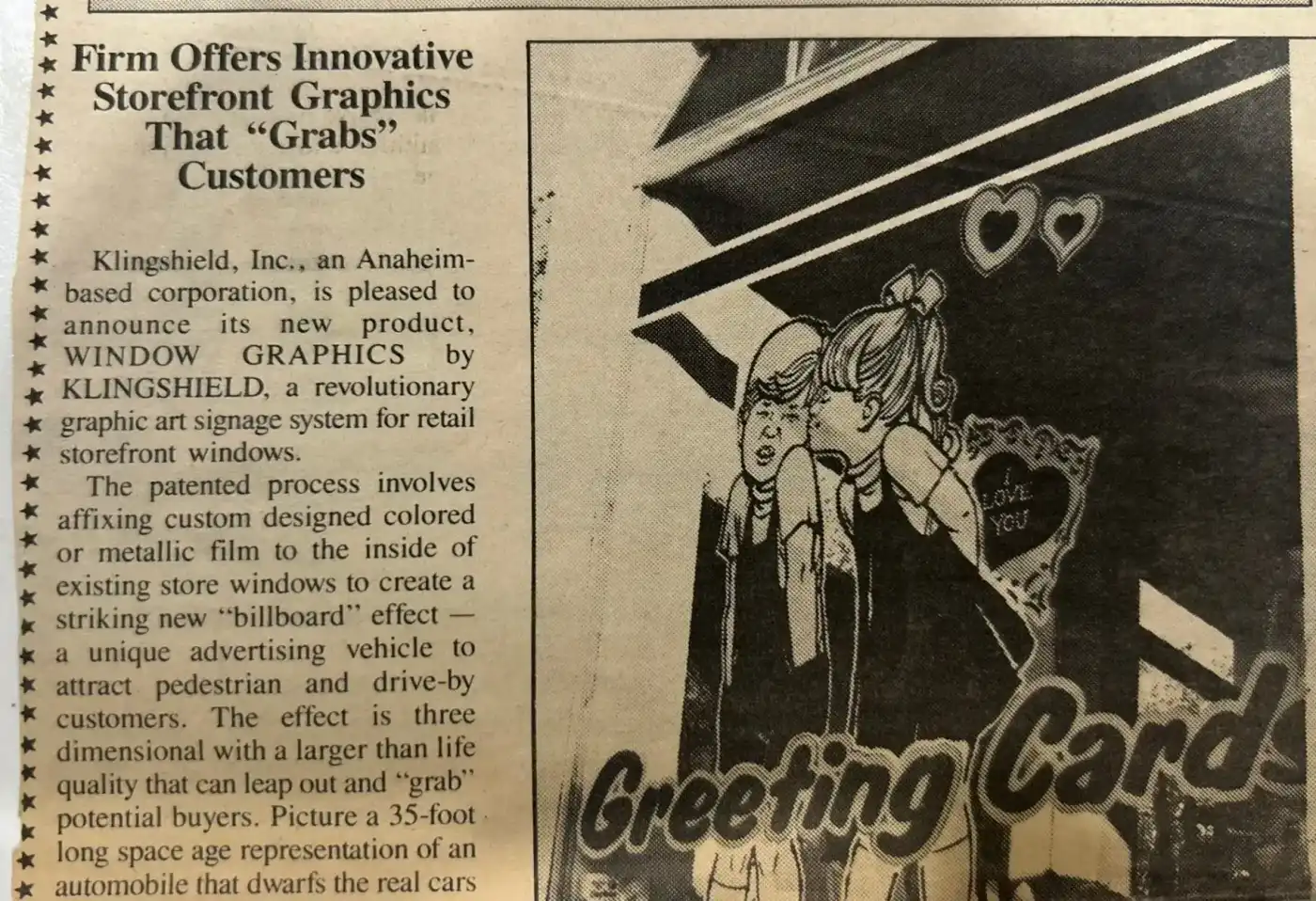
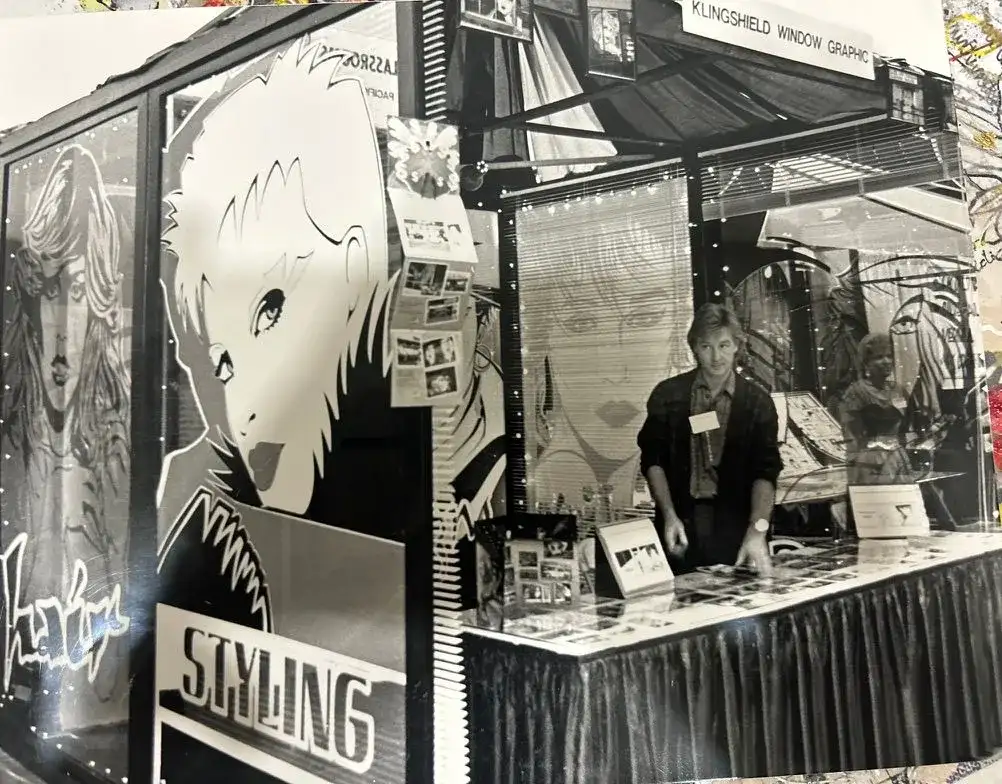
A trade announcement described WINDOW GRAPHICS by KLINGSHIELD as an Anaheim-based storefront-signage system: custom coloured or metallic film applied inside existing windows for a larger-than-life billboard effect. The coverage named retailers, salons, restaurants, and other businesses, and the West Coast Hair feature recalled a 1989 Long Beach hairdressers guild show where a woman’s face stretched roughly 40 feet wide by 30 feet high across the hall entrance. Tony joked then about putting the work in the record books and, one day, covering a glass skyscraper. The ambition was already architectural.
Chapter four
A life in motion.
Tony’s travels aboard Hoofbeats have made movement part of the practice. The water offers a different pace: long stretches of looking, sudden weather, unfamiliar shorelines, and the kind of quiet that lets an image find its way forward.
The Art of Life grows from that same attention. Long before ArtAntony, Tony was making images at architectural scale and using storytelling to change how a place felt and how people moved through it. The thread is not a job title. It is a lifetime of looking closely, then making something that can meet the world.
Chapter five
The work today.
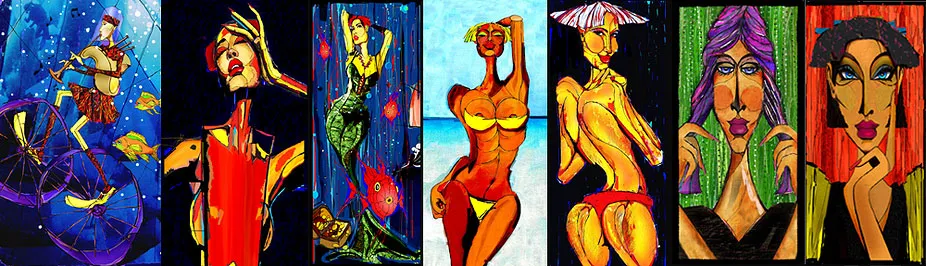
ArtAntony is where those threads meet now: vivid images, generous scale, and a feeling that keeps moving after the first look. The work is made to live with — in a home, a lobby, a restaurant, a corridor, or outside along a walkable center.
Mill Towne Center in Tempe is a living context for that idea. The Mill Towne Art Experience lets art step out into the spaces between everyday life, where a work can be discovered, scanned, and stayed with a little longer.
The archive
A working record, kept in view.
A visual timeline of photographs and clippings from Tony’s earlier work. Period claims are attributed to their publications; every image here is archive material.
See more from the archive
01 · London / glass protection
An invention shaped by danger.
The early record moves from London’s bombings to Safetykling, the glass-protection film described in the period coverage.
02 · Southern California / window graphics
The storefront became a canvas.
Trade and community coverage followed the work across dealerships, salons, computer shops, and other storefronts.
03 · Exhibition / trade-show work
Scale was part of the story.
The booth and the faces carried the same idea: an image could meet people before they entered a room.
Keep looking